Showing posts with label Features. Show all posts

9 Jun 2012

Creator Spotlight: Ishida Hiroyasu

Image from myanimelist.net

Sometimes, a talented individual can spring up from nowhere and wow the world. Enter 24 year-old (born in 1988) Ishida Hiroyasu, now an alumni of the famous Faculty of Manga at Kyoto Seika University. His 2 animation works, posted on Youtube in 2009 and 2011, drew a lot of attention and praise for not only the animation quality but also his directorial skills.


7 Jan 2011

Anime of 2010 (Music Awards)


The best OP, ED, soundtrack and anisong of 2010! For these awards, I'll also be listing a winner and a few runners up.

5 Jan 2011

Anime of 2010 (Story and Genre Awards)


Some of the best writing in anime. Needless to say, skip these if you don't want any story spoilers.

3 Jan 2011

Anime of 2010 (Character Awards)


2010 Anime Awards! Took a long time to come up with these lists, but it provided a moment for me to reflect on the trends and my likes and dislikes.

1 Jan 2011

Anime of 2010 (Watch List)


Happy 2011! It's been a good year for anime for me. AFA X, CosFest 2010, figurines and a couple of really good shows. Here's the year in anime!

8 Dec 2010

State of Gaming: Indie Revolution?


Gaming has weird ups and downs. It started with a bunch of computer scientists tinkering around with their new hardware to make fun little diversions. After a while, people start making games for kids, with computers and game consoles becoming the new toy. The industry saw a huge surge in interest and suddenly it became huge business. Publishers stepped in to help promote, package and distribute games for various studios, trying to differentiate their product from the hundreds flooding the market.

7 Aug 2010

Creator Spotlight: Ohira Shinya

Genius Party Beyond: Wanwa the Doggy (2008)


My first taste of Ohira Shinya was his weirdly wonderful Wanwa The Doggy (part of the "Genius Party Beyond" compilation). To say that he has the most recognizable animation style of this decade is, possibly, an understatement.

9 Jul 2010

Retro!: Coming Full Circle: Part 2

Note: This article was never completed. I quite like what I did in part 1, but part 2 ended up being a useless rant. Moreover, this is seriously out-dated. The casual gaming market boom on the iPod, iPhone, iPad cannot be ignored and needs to be explored, but I'd rather write a whole new article on that than to build upon what I started with "Retro: Coming Full Circle: Part 1". And so I decided to publish this as I didn't want it to go to waste. Read the article is after the jump. (edit: this is what happens when I have to study for a test; I publish 4 blog posts)

12 Jul 2008

Retro!: Coming Full Circle: Part 1

I had to choose between blogging about more recent stuff and stuff that have been on my mind for a while. Ended up deciding to write on old stuff, so excuse me for being a little late to the party.

It was with a cathode-ray oscilloscope that video games were first created. Pong wasn't the first video game ever created, but it was credited for kick-starting the video game industry back in the early 1970s. Being a social, 2-player game played mainly in bars, Pong was as addictive as the alcoholic beverages these locations served. Furthermore, guys and girls could play together on equal grounds as girls generally have good, if not better, hand-eye coordination.
Pong
However, in 1983, the video game market crashed. The chief reasons behind the crash were a flood of consoles and games, competition from personal computers, and price wars. Everyone, including their grandmother, was getting into the business of making games, eventually saturating the market. Pac-Man and E.T. (for the Atari 2600 console) published by Atari literally dug its own grave (hundreds of thousands of unsold cartridges were reportedly buried in a New Mexican landfill - wikipedia.org) and crashed the whole video game industry.
ET on the Atari 2600
For the next 2 years, game developers had a hard time selling their wares. Even Nintendo, which was revived in 1981 with its hugely successful Donkey Kong arcade game, struggled to push its new console, the Nintendo Entertainment System, or NES, into US toy stores. Eventually, the NES managed to sneak into stores disguised as R.O.B., a robotic toy. It became a huge success, churning out quality games through the "Nintendo Seal of Approval" program and making video games a cultural phenomenon. Till this very day, we see major game franchises, like Metal Gear, Final Fantasy, Legend of Zelda, and Dragon Quest, that had their roots all the way back in the mid 1980s during the video game "boom"....
The Seal that did it all...
Fast forward to 2008. Video games are now "a $10 billion industry, which rivals the motion picture industry as the most profitable entertainment industry in the world". First week launch sales easily clock in at millions of dollars for major releases (Halo 3 - US$300m). Metal Gear Solid 4 had its opening sequence filmed/edited in Hollywood by Logan (link to Logan might contain spoilers) with a budget that rivals what some game developers have for their entire production. WoW has millions of players running around in its virtual world. However, compared to the total number of games out there, these highly successful games are actually few and far between. Quoted from wikipedia.org:
In the early 21st century, rules of thumb noted by industry commentators estimated that 10% of published games generated 90% of revenue; that around 3% of PC games and 15% of console games have global sales of 100,000+ a year (with even this level insufficient to make high-budget titles profitable); and that about 20% of games return at least some profit. The rate of commercial failure has been estimated at 95% by the International Game Developers Association.

5% chance?
As you can see, making a video game is like rolling a standard 20-sided D&D die and hoping to get one particular number. Because of this, fewer and fewer developers innovate or create new franchises. Sure we have games like Mass Effect that have planned trilogies and reliable sports titles like Winning Eleven (as known as Pro Evo), but these games are usually simple story continuation or quick annual graphical updates. Mass Effect 1, for example, has a play time of about 20 hours. It's hardly epic, but it isn't an epic fail either. However, consider this: a trilogy would clock in a total of about 60 hours, assuming they are all roughly the same length, whereas other standalone RPGs like Final Fantasy typically have game times of 60 hours and above. Did the developers deliberately split the game into 3 parts? Well, its a good game, and it should clock in at about 30 - 35 hours if I do the side quests, so I don't have much to complain about personally. But the point is, game franchises are now made to get quick, easy money from gamers. Year after year, people buy sports titles that have hardly any upgrades to its gameplay. Games are now getting planned sequels to suck money out of gamers. We can't blame them. The industry is getting so cut throat that they have to resort to reusing textures, maybe introduce one or two new stages, repackage the game, and place a "2" behind the title, in order to actually make a game profitable, right? Perhaps.

Another tactic used, particularly by Square Enix, is the constant reharsh/remake of a "classic favourite". For example, Final Fantasy IV for the DS is the 7th incarnation of the game since its original release back in 1991. The reason for this tactic is that the main FF games take too damn long to develop! Even Tetsuya Nomura's original effort, The World Ends With You, didn't succeed financially although it did well critically. Squeenix's head honcho has gone on record to scold it's employees for disappointing sales due to the constant delay of their main franchises. Before long, we might see the remake of the entire FF series every time a new game is released! Of course, there are SOME fans out there who want SOME games to be remade (me, FF7!), but that doesn't mean simply porting it over to every single console for every generation. Maybe a new version every 2 or 3 console generations for some of the more popular games? Needless to say, costs are low and profits are high. You spend less time writing the story and designing the characters and you have a ready audience of hardcore fans, dying to replay their favourite gems in all its next-gen glory. On the other hand, you might piss off a horde of ravaging wolves if you screw it up somehow. Win-win situation? Depends.

Which brings me to the current craze. Casual games.

25 Aug 2007

State of Gaming: Another PC Revolution?

I'm back to blogging after... 2 months.

So anyway, Vista has been out for quite a while. Drivers are stabilizing and DX10 games are coming. So is everything rosy for M$?

Currently Bioshock, a DX10 game, has garnered fantastic reviews from many game journalists. Among the 9.9 and 10 out of 10s however, is one review that stood out from the rest. A review from Gamespot. It gave Bioshock a 9 out of 10. Not too shabby? The one problem they faced was stuttering frame rates after a few straight hours of play. There you have it. DIRECT X 10 IS STILL NOT FULLY OPTIMIZED. A friend of mine is currently playing the game and says that the graphics are nice, but nothing groundbreaking. The real test for DX10, Vista and DX10 cards still lie ahead, in the form of Crysis.

The Xbox360 however, has a healthy number of games right now. Compared to the current generation consoles, I think that the 360 has the most extensive and impressive line-up of games across nearly all genres at the time of writing. The PS3 has an impressive arsenal of games coming out in 2008 (and maybe 2009 too), while M$ has built a pretty amazing defensive wall with solid foundation. The Wii on the other hand continues to exist on another planet. It has recently outsold the Xbox360 in overall sales with a cool 10.57 million consoles sold to M$'s 1.56 million. Ninty's game catalogue right now however is hardly impressive. Launch title Twilight Princess, quirky RPG-Platformer Paper Mario, weird and admittedly uninspired mini-game collection WarioWare, and GC remake Resident Evil 4. Makes me wonder what those 10 million Wii users are playing now. Probably Wii sports.

On the handheld front, Sony attempts to spice things up with the sexy new PSP Slim and unlocked processor speed of 333MHz. DS still reigns king.

I had thought of building a new desktop for Bioshock and Crysis the same way I built one for Half-Life 2 back in 2003. The DX10 cards fail to warrant a purchase though... the technology is still young and immature. Which makes me wonder: Will PC games make another breakthrough the same way Half-life 2 (and Half-life) did back then? It's already 2007 folks. We need something that could blow our socks off. Sure, Bioshock is fantastic and might become Game of the Year or Best Game of All Time on GameRankings.com, but it just refines and doesn't revolutionize anything in particular. Here's hoping Crysis will be the one.

15 Jun 2007

State of Gaming: From Beeps to Symphonies

I'm sure for many of you old gamers out there, game music has mostly been in the form of annoying beeps that repeat over and over again as you try, for the umpteenth time, to clear a level.

Well, that was then.

We have since overcome the technological limits of the 8-bit and 16-bit generation. Most games have audio in 5.1 surround sound now to immerse the player in an alternate world. Creative Technologies and their numerous versions of EAX has lent a hand in the evolution of sound quality over the years. Even so, developers still never fail to amaze us with incredibly lousy sound effects and repetitive music that is just plain annoying. The first game that comes to my mind would be Pokemon (my sister is playing Pokemon Diamond on the DS Lite as I type...). The music isn't too bad, but it's kinda repetitive. This is a problem with most RPGs though. It would be inconsistent if a town has many different tunes to it, but a player would start to get irritated if he hears the same tune again as he returns to town for the 1384th time to sell some drops.

Anyway, bad music aside, lets talk about the good ones.

One of the earliest, and most recognizable, game tune would be Mario. The catchy little tunes worked those 8-bit consoles to their limit! The several tunes for each Mario level all became instant classics in the gaming world. No self-respecting video game music concert would be without the "Super Mario Medley". Along with other memorable classics such as Zelda, Chrono Trigger and Final Fantasy, these tunes set the standard for all game music composers to follow.

Here's a video of Martin Leung, a video game pianist for the Video Games Live series of concerts, performing "Super Mario Medley":


On the PC front, sound cards from Creative Technology made computers a "talking device". Did you know Michael Jackson visited Sim Wong Hoo's Comdex Fall booth in Las Vegas back in 1989 for 30 minutes because he was so captivated by the Sound Blaster card? The Sound Blaster went on to be the De Facto audio card standard, selling 100 million units in 10 years. At that time, it was games like Final Fantasy VII that changed the video game music scene. It wasn't so much about clarity or quality of the audio, it was purely just musical creativity and production quality. Compared to the consoles at that time, music in games for PCs weren't that big a deal. That was because computers could already play close to studio-quality audio. FF7 on the other hand had midi music. However, like its PlayStation counterpart, pieces of compositions like One Winged Angel became classics. It was compositions like these that make people start to feel that video games took music seriously. Unlike the music you hear on the radio and MTV, video game music (along with original movie scores) are like classical music; Timeless pieces of work that retain their popularity for years/decades/centuries. Composer Harry Gregson-Williams primarily composes for Hollywood movies like Shrek and Narnia, but he also composed the opening theme for the Metal Gear Solid series, showing how the production values of video game music is continually going up.

Here's a video of Eminence Symphony Orchestra, a video game symphony, performing Final Fantasy classic "One Winged Angel". This piece is almost always played as a final or encore piece at ANY video game music concert:


Following the birth of better sound cards for the PC and consoles (5.1 surround sound support for the Xbox), game creators were given alot more horsepower in the audio department than they knew what to do with. High quality surround sound audio? Check. So where do we go next from here? There can only be that many 'birds chirping' and 'trees swaying' audio layers. They decided to take in-game music a step further to match Hollywood quality. As you can see, the main difference between movies and games were that games were interactive. Players could speed up or slow down the action depending on whether they wanted to attack head-on or sneak pass enemies. To make the atmospheric music suit the action like a glove, game audio designers programme their music to change on the go. I'm not a music expert nor an ace programmer so I shan't go into the specifics, but basically that means shifting tempos and whatnot to suit whatever action the player throws at the game. One game that makes use of this technology/technique is Halo. The music rises and fades effortlessly as you take out the Convenant horde (not so effortlessly). It was a great game not just for its gameplay, but also for its story and overall atmosphere, undoubtedly bolstered by a fantastic score (and 'interactive music'). In fact, its so popular that 4 million copies of Halo 3 has been pre-ordered in the US ahead of its September 25th release date.

So what have we learned? A good game requires good music. That's for sure.

Here's a video of a group of students performing Halo's theme song for a school talent show, proving once and for all that nerds can be musicians and musicians can be nerds:


And good music requires soundtrack CDs and concerts. That's right. Concerts. Music from the Final Fantasy was ripe for orchestras and choirs, and the fans were aching to hear One Winged Angel performed with a full orchestra, so Dear Friends was born. A series of concerts held in the US from 2004 to 2005 for Final Fantasy fans and it was a great success. It wasn't exactly a world first (Sydney's Eminence Symphony Orchestra started in 2003, with their 1st concert featuring Final Fantasy music), but it was one of the most prolific concert series due to guest appearances by Nobou Uematsu, long-time composer of Final Fantasy music. Here in Singapore, part of Eminence (2 violinists, 1 pianist, 1 guitarist and 1 percussionist) and Yasunori Mitsuda performed at the Victoria Concert Hall on 23 December 2006 to the tunes of various games and anime. This was just an appetizer for what was to come in 2007. As part of the Singapore Arts Festival, PLAY! A Video Game Symphony will be performing to a sold-out crowd on 15 and 16 June at the Esplanade. Just read Net Crawl: The First for links and more details about this concert. Expect the works of Jeremy Soule (The Elder Scrolls), Harry Gregson-Williams (Metal Gear Solid) and Nobou Uematsu (Final Fantasy) in an unforgettable night, produced by the same people who did Dear Friends.

Here's a 6 minute behind-the-scenes look at PLAY!:


I'll be there for the 16 June, 7.30pm show. Can't wait~!

8 Feb 2007

State of Gaming: The 1-Up Mushroom

Ahh... back to my gaming roots. I'm not going to talk about retro games in the post now (that would be saved for Retro! features). Instead, I shall talk about how I am now getting back into gaming and how I got out of it in the first place...

Until recently, I had been gaming quite a lot, whether its on the PC, Xbox or on an emulator. Even during my A Level examinations, I was playing quite a bit of Final Fantasy Tactics Advance (averaging about 2 to 3 hours a day on that game). And then after my examinations, I sort of became really bored of gaming. Why? My PC has just hit 3 and my Xbox controller is starting to become a little wonky. Even emulated and casual/indie games began to seem boring. I tried to get back into gaming by playing C&C Generals, but I got bored of it after just 3 days. It was only 2 days ago that I suddenly realise what was wrong...

I had been depending too much on game guides. Yes folks, I'm a cheat. Every secret passage and hidden ending is known to me even before it happens. This took a lot of the fun exploration factor out of many games. Every major plot twist is known and bosses became too simple. Gameplay was punctuated by my frequent checks on GameFAQS. To cut this long story short, I began trying to enjoy games as it is meant to be played. With the help of Final Fantasy 6 (released as FF3 on the SNES to the US), I can now proudly say that I'm a gamer again. Games like this make me feel that there IS some hope in this industry filled with copies and unimaginative games. Too many games look like clones of each other, with the same style, gameplay and controls (the only difference being visual). Thankfully there's the Nintendo and SquareEnix to depend on for occasional surprises and constant quality.

With this flame re-ignited, I downloaded the demo for Supreme Commander the very moment it was available on FileAxis, and boy does it blow my mind! When I read articles and previews of this game, I couldn't really understand what was the big deal. The trailer (with the 10 or so nukes firing at the same time and gigantic experimental units roaming the beautifully destructible environment) made me more interested. The demo brought me to an orgasm. Seriously, you have to try it to feel the sense of scale and destruction for yourself. Play it. And be blown away by it. (www.fileaxis.com)

10 Nov 2006

Retro!: Sonic on Genesis

I'm not that much of a retro gamer myself, but once in a while its just great to reminisce those days.

OK, a little bit about my gaming background.


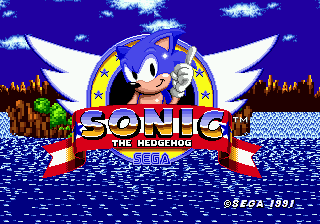
One of my first gaming experiences (and definitely one of the most memorable) was Sonic the Hedgehog on SEGA Genesis. It was so long ago, I can't even remember how old I was! All that remains in my memory was the late-night games of Sonic and the adrenaline of racing through a stage at break-neck speeds. The simple, yet catchy, music and sound effects on that 16-bit console left a huge impression on me too. How obsessed am I with Sonic? I bought a Panasonic VS6 mobile phone just because it has Sonic The Hedgehog on it (although I don't play it much because of the sucky controls...).

Imagine my dismay when I bought Sonic 3D for the PC when I was older. The developers didn't manage to successfully capture the adrenaline and speed of 2D Sonic. The Blue Hedgehog with an attitude was dead for me. The recent remake of Sonic Genesis on the Gameboy Advance left a sour taste in the mouths of many reviewers. If I'm not wrong, this year marks the 15th anniversary of Sonic, and to celebrate that SEGA has released a new Sonic game for soon-to-be-current-gen consoles. Judging by initial response from the gaming press, this game should be rather good. I'm still waiting for Gamespot or Gamespy to review the Xbox360 title before I say anything more about it though. From what little I've seen from a Wii gameplay video, I have to say I'm not impressed. Sure it's pretty and it's fast, but I just don't like how the game feels stuck between 2D and 3D. I don't think anyone can pull off Sonic in a 3D environment and freedom without taking away the sense of speed. Sonic lives on 2D, not 3D. Perhaps sometime in the future SEGA will prove me wrong, but until then, I'm hoping to get my Sonic fix with the Wii Virtual Console version of the Genesis classic.

6 Nov 2006

State of Gaming: Gears or Halo?

I've just seen Gamespot's On the Spot video (2 November) . Firstly, let me say that I'm all for better gameplay even if some graphical quality has to be sacrificed... With that out of the way...

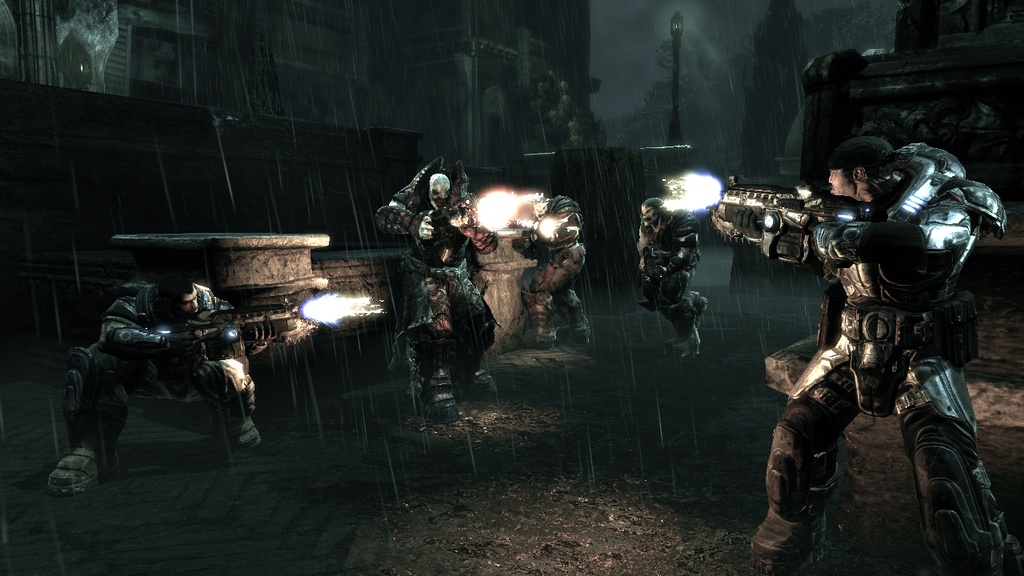
Gears of War (X360) looks wicked!


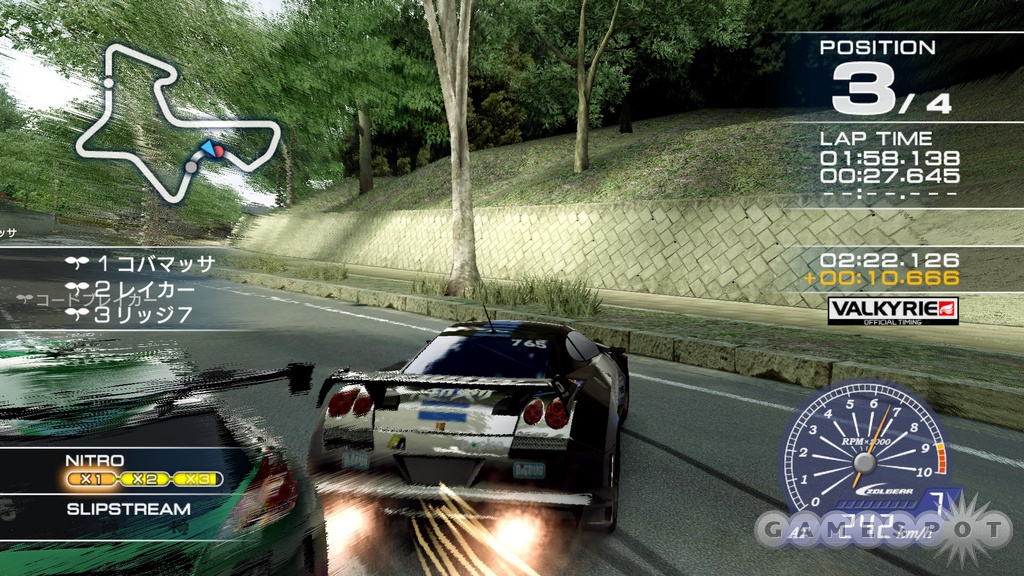
And Ridge Racer 7 (PS3) is simply stunning!

Graphics aside, both games seem to play really well; Ridge Racer with its arcade-style of crazy drift racing and Gears of War's 3rd-person shaky-camera shooter.


Gears of War really got me thinking: Will Halo 3 still be the Xbox360 system-seller that M$ claims it to be? After all, as quoted from Bill Gates himself, Halo 3's launch was supposed to coincide with the PS3 launch in a bid to draw attention away from their rival's console. Now that Gears of War is going to be out instead, does M$ see it as a replacement to Halo 3? Will Bungie continue to get huge funding and support from M$ if it doesn't meet expectations? The bar has been raised by Gears, and Halo might not be able to reach it. Brace yourself for some disappointment. Although, if Halo 3 DOES make it through, Sony is going to have a hard time fighting off both M$ and Nintendo.